English-speaking.
EU-connected.
Ireland is the only English-speaking country left in the European Union — with a 2-year stay back, the European HQs of Google and Pfizer, and one of the friendliest student visa routes in Europe.
Six reasons Ireland quietly beats its neighbours.
Smaller than the UK, but with advantages students often miss until they compare side-by-side.
2-Year Stay Back
The Third Level Graduate Scheme gives Masters students a 2-year post-study work permit — same as the UK, with no employer sponsorship needed to start looking.
English — and in the EU
The only English-speaking country left in the EU. Study in English, then work anywhere in the 27-country Eurozone without a new visa.
Tech & pharma European HQs
Google, Meta, Apple, LinkedIn, Microsoft, Pfizer, Johnson & Johnson — they all run their European HQs from Dublin. Hiring graduates every quarter.
Friendlier visa path
Ireland's student visa has one of the highest approval rates for Indian applicants and a straightforward financial documentation process.
Genuine Indian network
~30,000 Indian students already study in Ireland. You won't be the first one at your university explaining what Diwali is — the alumni track is already cut.
Pathway to EU residency
After the 2-year stay back, the Critical Skills Employment Permit leads to long-term residency in 5 years — one of the faster European settlement routes.
Not just Dublin. Four real options.
Where you study in Ireland shapes your budget, sector exposure, and first job. A candid look at the four cities our students choose between.
Home to Silicon Docks — every major tech and pharma company has its European HQ here. Expensive to live in, but the jobs market compensates.

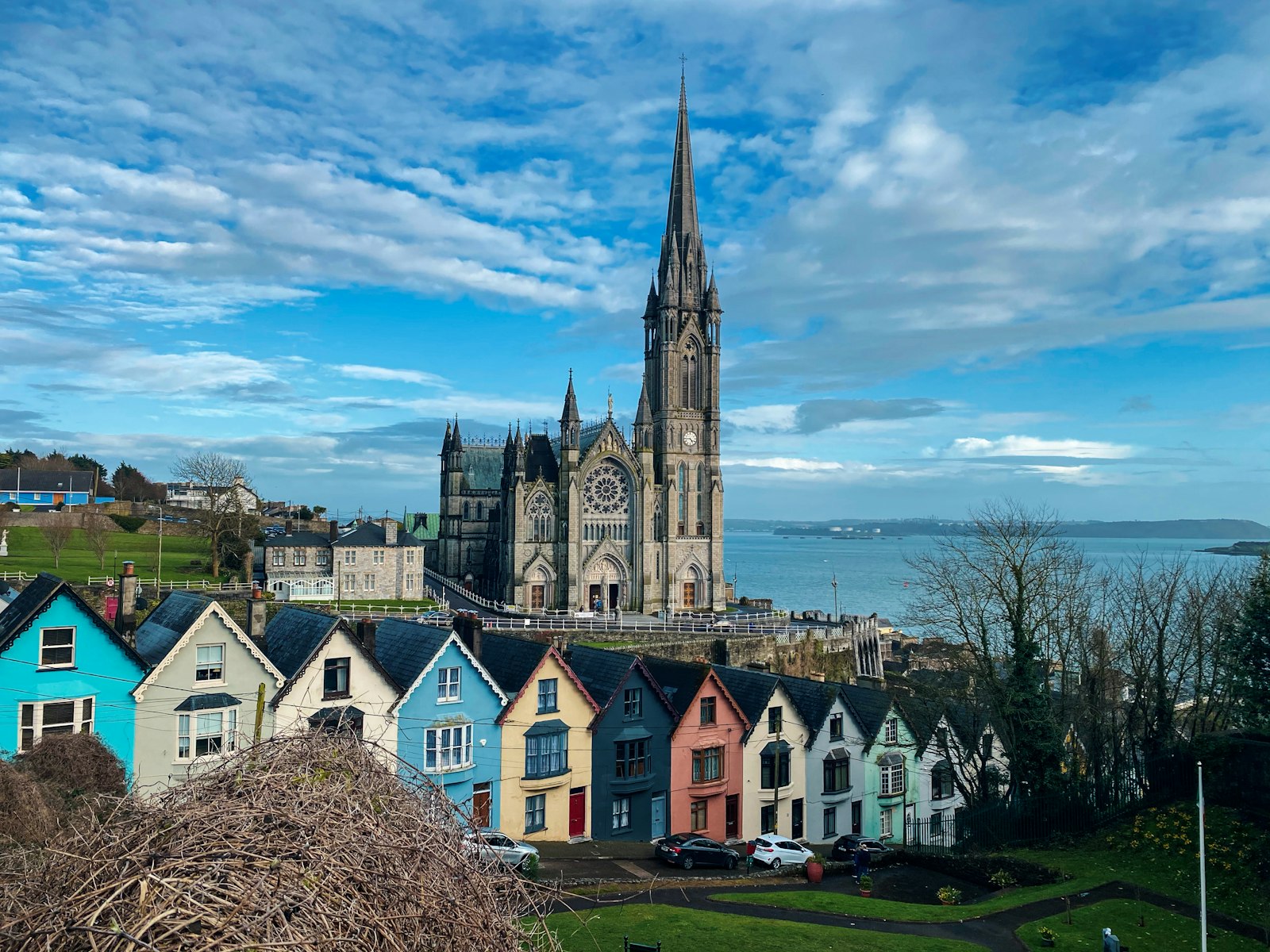
Ireland's second city. Apple, Pfizer, Johnson & Johnson all have major operations here. Cheaper than Dublin, strong in pharma, medtech, and finance back-office.

The medtech capital of Europe — Medtronic, Boston Scientific, Abbott all cluster here. Smaller, safer, more affordable than Dublin, with strong sector specialisation.

Shannon region — Ireland's engineering and aviation cluster. Strong links with industry, cheaper than Dublin, and rapidly growing tech sector.
Maynooth, Waterford, Athlone, and Sligo are strong options too — we cover them in consultation based on your profile and target sector.
What does one year in Ireland actually cost?
A realistic budget for a 1-year Masters — tuition plus everything else. No hidden optimism.
| Line item | In EUR | In INR (approx) |
|---|---|---|
| Tuition (1-yr Masters) | €12,000 – €25,000 | ₹11 – 23 L |
| Living cost (per year) | €10,000 – €13,000 | ₹9 – 12 L |
| Visa + registration | €300 – €600 | ₹30 – 55 K |
| One-time setup | €800 – €1,200 | ~₹1 L |
| Total for 1 year | €23K – €40K | ₹21 – 36 L |
Stamp 2 → Stamp 1G → Critical Skills.
Three stages. A clear pathway from student to long-term EU resident.
Your study permission.
Issued after you land and register with immigration (IRP card). Covers your full course and lets you work 20 hrs/week in term.
Your 2-year runway.
The Third Level Graduate Scheme. Apply after graduating with a level 9 (Masters) award. No employer or job offer required.
Your long-term route.
The Critical Skills Employment Permit — fast-track to residency for roles on the shortage list (tech, engineering, healthcare, finance).
For a September 2026 intake.
Ireland runs rolling admissions — early applicants get scholarships and a calmer visa window.
Profile prep, programme shortlist, IELTS/PTE if needed.
Applications open. Ireland runs rolling admissions — early applicants win scholarships.
Offers issued. Accept, pay deposit, begin financial proof prep.
AIP letter → Irish student visa → biometrics at VFS.
Accommodation, flights, IRP registration prep.
Intake. You're in Dublin, Cork, Galway, or Limerick.
Ireland, handled end-to-end.
Ireland is a small, tight market — and we know it well. We work across the full Irish university landscape, from Dublin's research universities to the technological institutes in Cork, Galway, and Limerick.
You don't get funnelled to the two or three universities a typical agent is paid to push. You get the full Irish landscape, assessed against your profile, with the inside track on scholarships, programme fit, and application timing.
Senior counsellors only. No junior hand-offs. No hidden commissions.
The things most students actually ask.
Is Ireland really easier than the UK?
In a few specific ways, yes. The visa process is more predictable, the approval rate is higher, and the cost profile is slightly lower than London. The Graduate Scheme is similarly generous at 2 years. The UK has more universities and deeper brand recognition — Ireland has a tighter, more specialised market with strong sector outcomes.
What's the catch with Dublin's housing?
The honest answer: Dublin rent is genuinely high and supply is tight. Most students share accommodation, apply for on-campus housing early, and budget €800-1200/mo for rent even with flatmates. We help you plan the housing route as part of the pre-departure process.
How much budget do I need realistically?
Plan for ₹21–36 L for a 1-year Masters, including tuition, living, visa, and setup. Cork/Galway/Limerick sit in the lower half of that range; Dublin in the upper half. Scholarships of €2,000-5,000 are commonly available and we help you apply.
Do I need a high GPA for Irish universities?
Most Masters programmes accept 60%+ (or GPA equivalent), and the Irish system weights your statement, work experience, and programme fit heavily. A strong profile story often matters more than raw scores.
Do you only work with top-ranked Irish universities?
No — we work across the full Irish university landscape. Our advice is based on your profile, budget, and target sector, not on which two or three universities pay the highest agent commission.
Let's see if Ireland is right for you.
30-minute call. No sales pitch. We'll give you a realistic read on your profile, budget, and target universities.